
Understanding power factor is key to improving energy efficiency and reducing electricity costs—let’s break it down
Get Closer With Us
We optimize power factor to enhance energy efficiency and reduce costs. Our proven solutions, like capacitors, lower bills, reduce losses, and increase system capacity. Experience tailored services that drive savings.
- Home
- About
Power Factor
Power Factor
What Does It Mean
What Does It Mean
Here is a BEER ANALOGY to simplify the concept
Here is a BEER ANALOGY to simplify the concept
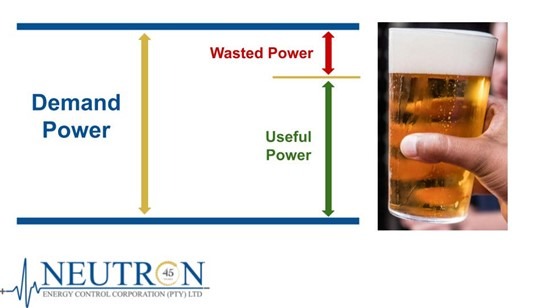
Cheers to Understanding Power Factor
Cheers to Understanding Power Factor
Understanding power factor may seem complex, but it can be as easy as enjoying a glass of beer! Here’s the breakdown:
Beer (Active Power, kW): This is the actual beer you drink—the useful energy that gets the job done.
Foam (Reactive Power, kVAR): No one orders beer for the foam! This represents wasted energy that doesn’t do real work, just generating heat or vibrations.
Mug (Apparent Power, kVA): The mug symbolizes total power capacity from the utility, holding both beer (useful power) and foam (wasted energy).
Ideally, your mug would be all beer, but there’s always some foam. This inefficiency strains the power supply, leading utilities to charge extra. Think of peak demand as serving everyone at the bar at once—you pay a premium to ensure there’s enough beer!
A low power factor is like a fuel-guzzling car; inefficiency drives up your bill. And remember, in AC circuits, some foam is inevitable—there’s always a bit of interference (impedance).
It’s all about balancing your beer-to-foam ratio: the better the balance, the lower your costs!
Find out how your business can start saving money
Why Us
Power Factor: A Basic Overview
Choose us for expert guidance in optimizing your energy use. Our experienced team provides tailored solutions that enhance efficiency, reduce costs, and support your business growth. We stay updated on the latest technologies and financial incentives to help you make informed decisions.
Power factor Series
Poor power factor results in inefficiencies, higher costs, and more breakdowns. Utilities like Eskom may charge extra for factors below 0.96, which also reduces distribution capacity and causes voltage drops. Improving power factor can enhance productivity.
What is power factor?
Power factor compares real power (usable) to apparent power (total effort) using the analogy of a horse pulling a cart on uneven tracks. Sideways pulls represent wasted effort (reactive power). A power factor close to 1 means less wasted effort.
Causes of poor Power factor
Poor power factor often arises from inductive loads like transformers, motors, and high-intensity lighting, typically found in industrial settings. Unlike resistive loads that generate heat, inductive loads require current to create a magnetic field.
Why improve Your power factor?
Low power factors raise electricity bills and decrease efficiency. Correcting the power factor can reduce costs, increase system capacity, improve motor performance with stable voltage, and lower electrical losses.
Conclusions
Correcting power factor may not always lower your electric bill, but it boosts efficiency for utilities and end-users. Benefits include reduced energy bills, lower losses, improved voltage, and increased capacity for utilities. Capacitors are an effective solution for this improvement.
Optimise your energy use
Eskom’s Energy Advisors in South Africa help businesses optimize energy use by assessing needs and systems, exploring new technologies, analyzing investment costs, improving energy patterns for growth, and providing information on financial incentives and grants.
Electrical & development solutions light up every corner of your place. Find Your Solution
Our Team
Meet With Professional Team
Our dedicated experts optimize energy efficiency and power systems, delivering tailored solutions to drive results and promote sustainability.



Get In Touch
Let Us Optimize Your Power Factor to Meet Your Needs
Enhance your energy efficiency by optimizing your power factor with our expert solutions.
Help & FAQ
Find Your Answer Here
Think of power factor correction like cutting out the middleman – you get straight to the good stuff! By making your system more efficient, you’re basically telling Eskom, "No thanks, we don’t need to pay for extra power that’s not even working for us!" It reduces the wasted energy (like foam in your beer glass), which means smaller electricity bills and fewer penalties. You also get the added bonus of freeing up space in your system so you can use more power without paying for an upgrade. Talk about a win-win!
Power factor correction is like giving your electrical system a pep talk. Your system might be wasting energy on things like heat and vibrations – not exactly helpful, right? By installing capacitors or other fancy gadgets, you get rid of that waste and make your system work smarter, not harder. It’s like finally getting your old car to run efficiently after years of guzzling gas. So, with a little power factor correction, you stop paying for wasted energy and start saving big!
Power factor correction isn’t just nice to have – it’s like having a GPS for your electrical system. Without it, your system is going to keep wandering around, using more power than it actually needs. And guess what? Eskom will charge you extra for that. Power factor correction brings everything into alignment, cutting down on wasted power and keeping your business running more smoothly. So, whether you want to lower your bills or give your equipment a longer, happier life, power factor correction is key.
Fixing your power factor is like giving your electrical system a makeover. It’s all about making sure your system isn’t wasting energy on stuff that doesn’t matter. The fix? You install capacitors, which help reduce that pesky reactive power. Once they’re in place, your system will run much more efficiently, kind of like swapping your old clunker for a shiny new hybrid. And the best part? You’ll save on your electricity bill and avoid those sneaky penalties from Eskom.
If your power factor is low, it’s like your business is running with a constant power-draining backpack on. Your system uses way more electricity than it needs, and Eskom isn’t going to ignore that – they’ll slap you with extra charges. Plus, all that unnecessary effort can wear out your equipment faster. In short, low power factor = higher costs and more headaches. But, fix it, and you’re looking at a leaner, meaner, more efficient electrical system that costs less to run.